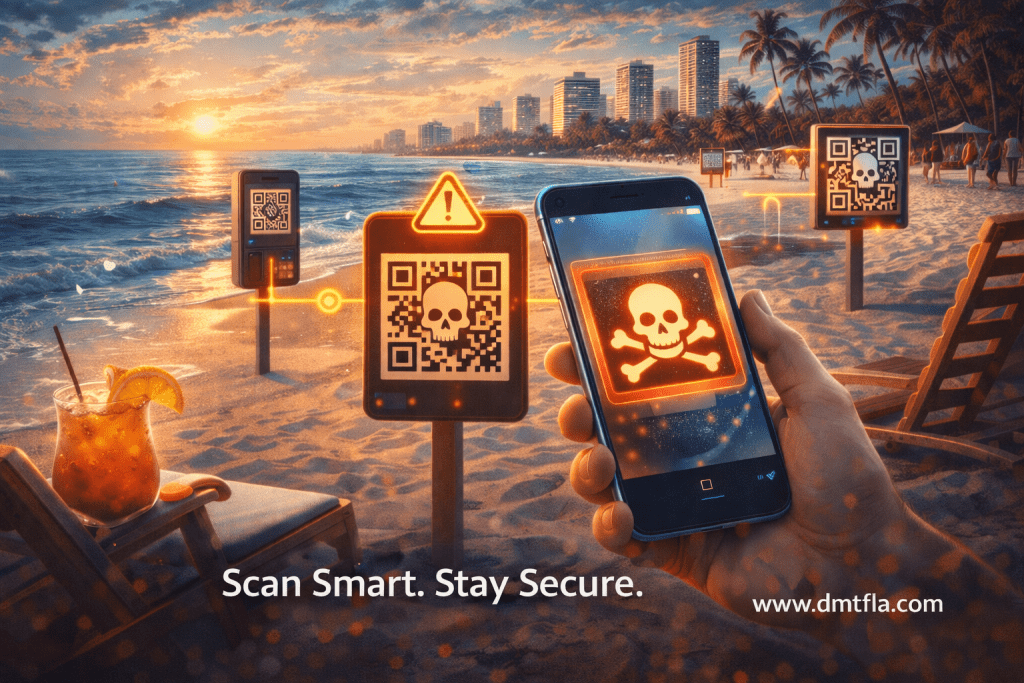
QR code security risks are rising quickly across South Florida, and most people never see them coming. QR codes now appear everywhere—from restaurants and parking meters to event flyers and office doors. They feel convenient, fast, and harmless.
However, that convenience is exactly what makes them dangerous.
Why QR Codes Are So Effective for Scammers
When someone scans a QR code, they skip the step of checking a web address. Instead of typing a URL, the phone opens whatever link the code delivers. As a result, fake login pages, malicious downloads, and payment scams can look completely legitimate.
How This Affects South Florida Homes and Businesses
In South Florida, QR codes are used heavily in restaurants, condos, gyms, events, and shared office spaces. Unfortunately, attackers take advantage of high traffic areas where people scan quickly without thinking.
A single scan can lead to stolen credentials, compromised email accounts, or access to connected home and business networks.
Common QR Code Mistakes
Scanning codes without verifying the source, entering login information immediately, and using personal phones for work-related QR links all increase risk. During busy days, these shortcuts feel harmless—but they open the door to real exposure.
How This Fits the Bigger Risk Pattern
QR code scams connect closely with public Wi-Fi risks, personal email misuse, and smart device exposure. The common factor is trust combined with speed.
Related reading:
Public Wi-Fi Security Risks in South Florida
Personal Email Security Risks for South Florida Businesses
How DMT IT & Cybersecurity Solutions Helps
DMT IT & Cybersecurity Solutions helps South Florida homes and businesses identify risky behaviors, secure mobile access, and prevent small mistakes from turning into costly incidents.
Cloud Services in Florida
Digital Marketing Services in Florida
AI Automation Services in Florida
Contact DMT IT & Cybersecurity Solutions to reduce everyday security risks before they escalate.
CISA QR code safety guidance
Technology security trends
This article is part of the South Florida Technology Risk Series.
Leave a Reply