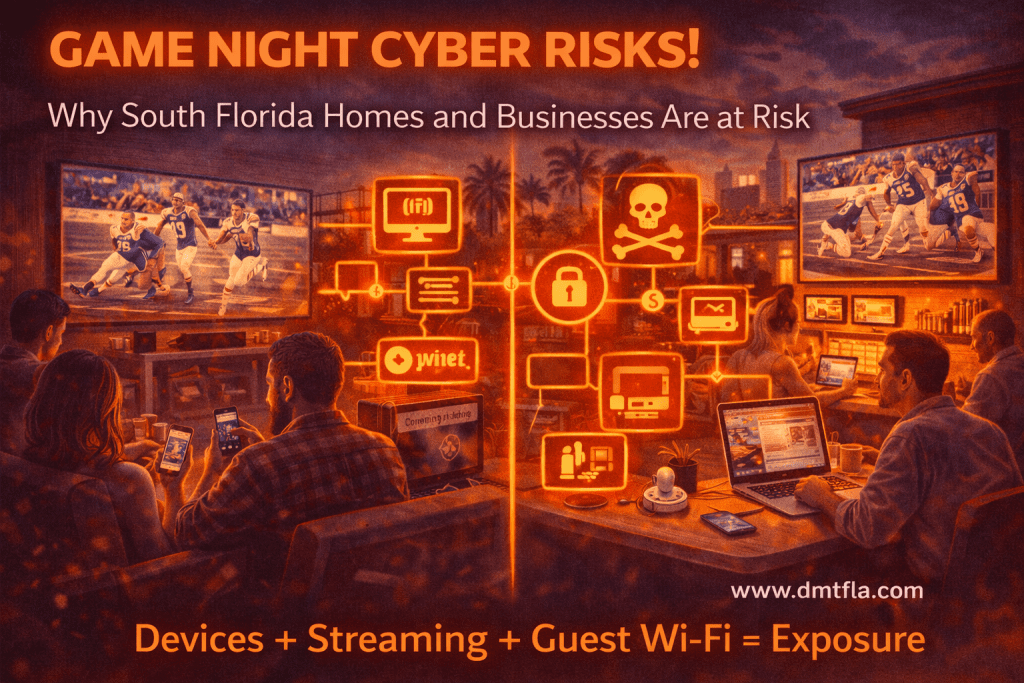
This is how game night quietly turns into a security problem.
Game night cyber risks increase every time multiple devices connect to the same network. In South Florida, game nights often mean friends over, phones out, betting apps open, and several TVs streaming at once. Everything feels normal. However, that convenience creates the perfect opening.
Picture this. A playoff game is on. Guests ask for the Wi-Fi password. Someone connects a streaming box. Another guest opens a betting app. A smart TV updates in the background. Meanwhile, a work laptop stays connected to the same network.
Why Game Nights Create Higher Risk
During busy moments, security gets ignored. As a result, guest devices join trusted networks without limits. In addition, many streaming devices and smart TVs run outdated software. One unsecured device can expose everything connected to the network.
Attackers know this. They target moments when people are distracted and systems are overloaded.
Who This Affects Most
This risk affects homeowners hosting watch parties, short-term rentals, bars, restaurants, and small businesses showing games across South Florida.
The Risk Most People Never Consider
The biggest danger is not slow internet. It is exposure. Once a network is compromised, attackers can monitor traffic, steal credentials, or access connected accounts. In many cases, signs appear days later.
Simple Ways to Reduce Game Night Risk
Use a separate guest network, update streaming devices, limit connected devices, and avoid using banking or work apps during shared network activity.
How DMT IT & Cybersecurity Solutions Helps
DMT IT & Cybersecurity Solutions helps South Florida homes and businesses secure networks for high-traffic moments. We segment devices, strengthen Wi-Fi security, and reduce exposure before problems start.
Cloud Services in Florida
Digital Marketing Services in Florida
AI Automation Services in Florida
Contact DMT IT & Cybersecurity Solutions to protect your network before the next game night.
CISA cybersecurity guidance
Consumer technology insights
Technology security news
This post is part of our South Florida Technology Risk Series.
Leave a Reply