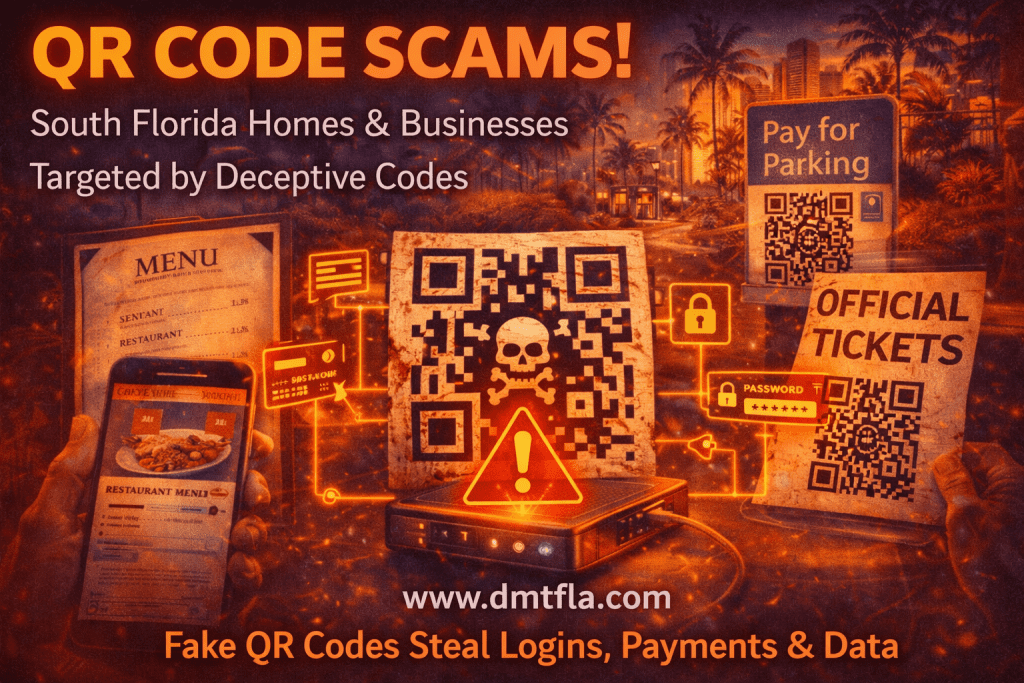
This is one of the easiest scams to miss.
QR code scams are spreading quickly across South Florida because they look harmless and familiar. People scan codes to view menus, pay for parking, check into events, or access promotions. It feels fast and convenient. However, that single scan can open the door to serious problems.
Picture this. A restaurant in Miami replaces printed menus with QR codes. A parking sign in Fort Lauderdale displays a payment QR. A flyer near a stadium advertises “official tickets.” One fake sticker placed over the real code sends users to a convincing copycat site.
Why QR Code Scams Work So Well
South Florida sees constant movement from tourists, locals, and event crowds. As a result, people scan quickly without verifying links. In addition, QR codes hide the destination URL, which makes it harder to spot fake websites.
Once scanned, victims may enter login credentials, payment details, or personal information. Some sites even install malware silently in the background.
Who This Affects Most
Restaurants, retail stores, parking facilities, event venues, short-term rentals, and anyone scanning QR codes in public places across South Florida.
The Real Risk People Don’t Expect
The danger is not just financial loss. Stolen credentials can be reused across email, cloud systems, and work accounts. Many victims only notice the issue days later, long after the QR code is gone.
Quick Checklist Before You Scan
Check for tampered stickers, preview links carefully, avoid logging in from QR pages, and never enter payment details unless the source is verified.
How DMT IT & Cybersecurity Solutions Helps
DMT IT & Cybersecurity Solutions helps South Florida businesses reduce QR-related risks through secure systems, user awareness, and monitoring. As a result, businesses protect customers while maintaining convenience.
Cloud Services in Florida
Digital Marketing Services in Florida
AI Automation Services in Florida
Contact DMT IT & Cybersecurity Solutions to protect your business and customers from emerging scams.
CISA cybersecurity guidance
Consumer technology insights
Technology security news coverage
If this helped you, share it before someone scans the wrong code.
Leave a Reply